

What Every Parent Should Teach Their Child About Money Before They Turn 18
You walk into a supermarket, stroll through the aisles while pushing a grocery cart with your kid by your side, pick up all the necessary items, and arrive at the billing section. You pay using your phone. You walk into a movie hall and buy the tickets with your phone. You walk into a hospital and pay for the medicines using your phone. Children just don't see us using physical money anymore.
Press Information Bureau gives us the following data: Over a decade of operations, UPI has demonstrated extraordinary scale and momentum. Annual transaction volume expanded from just 2 crore transactions in FY 2016-17 to over 24,162 crore transactions in FY 2025-26, representing an almost 12,000-fold surge in transaction volume. Parallelly, transaction value rose sharply from ₹0.07 lakh crore in FY 2016-17 to approximately ₹314 lakh crore in FY 2025-26, translating into a more than 4,000-fold increase in transaction value.
Today's children are growing up in a world where money is increasingly digital, invisible, and effortless to spend. More than ever before, financial well-being depends not merely on understanding money, but on understanding the behaviours, emotions, and decisions that shape its use.
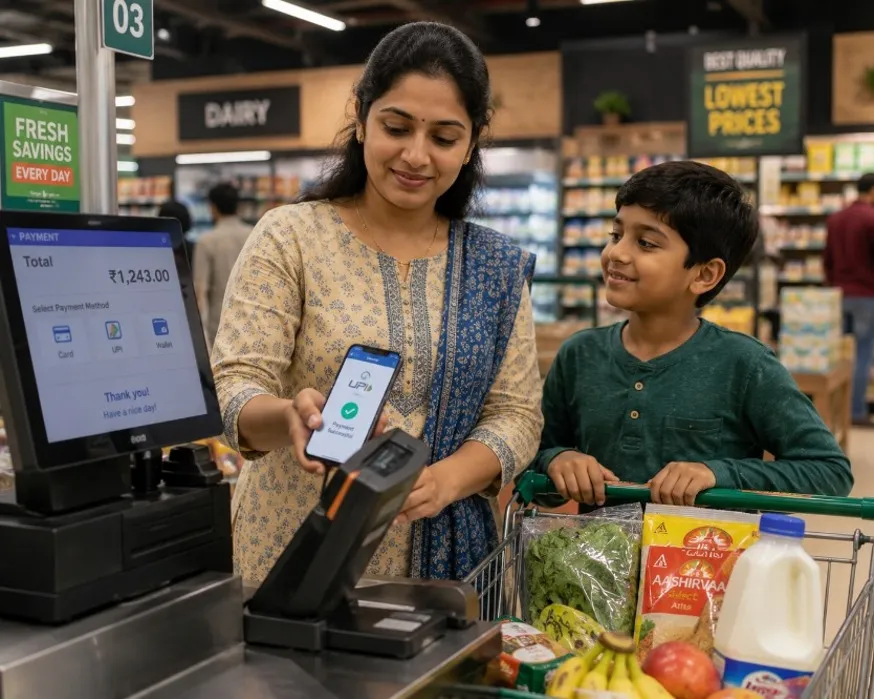
A generation ago, kids saw their parents counting money, waiting for paydays, and being cautious before purchasing something. But today, money transactions happen instantly, credit is available 24/7, algorithms dictate what we choose to purchase, and social media continually changes what having "enough" means.
The biggest financial challenge that the upcoming generation faces will be making good choices when living in an instant-gratification world. Hence, our role as parents becomes much more complex than simply teaching kids to save or invest. Instead, we need to ensure that they have formed a proper relationship with money before they start handling it.
Teach Financial Wisdom Before Financial Products
Kids should know about these eternal truths before they learn about banks, stocks, or mutual funds.
- Money isn't just numbers in a bank account. It reflects someone's time, hard work, skills, and sacrifices. Respecting money starts with respecting the effort behind it.
- Money is limited, but wants are endless. Every purchase is a choice. Teaching children to prioritize needs helps them make thoughtful spending decisions.
- In a world of tap-and-pay, money can feel invisible. Involve children in budgeting, bills, and everyday money conversations so they understand where money comes from and where it goes.
- Many purchases are emotional, not practical. Help children pause before spending and make choices based on values rather than impulse or peer pressure.
- The cheapest option isn't always the best, and the most expensive isn't always worth it. Good financial decisions come from understanding value.
- Life is unpredictable. Saving isn't about denying yourself today, it's about preparing for tomorrow.
- Borrowing means using tomorrow's income today. Teach children that every loan is a commitment that must be repaid with future effort.
- Not every financial mistake needs rescuing. Small lessons today can prevent bigger mistakes later.
- Health, knowledge, relationships, character, and time are just as valuable as money, often more.
- Kids learn more from what we do than what we say. Our everyday habits shape their attitudes toward money far more than any lecture.
- The greatest financial gift we can give our children isn't money itself, it's the wisdom to earn it honestly, spend it thoughtfully, save it wisely, invest patiently, and give generously. That's a legacy that lasts a lifetime.